
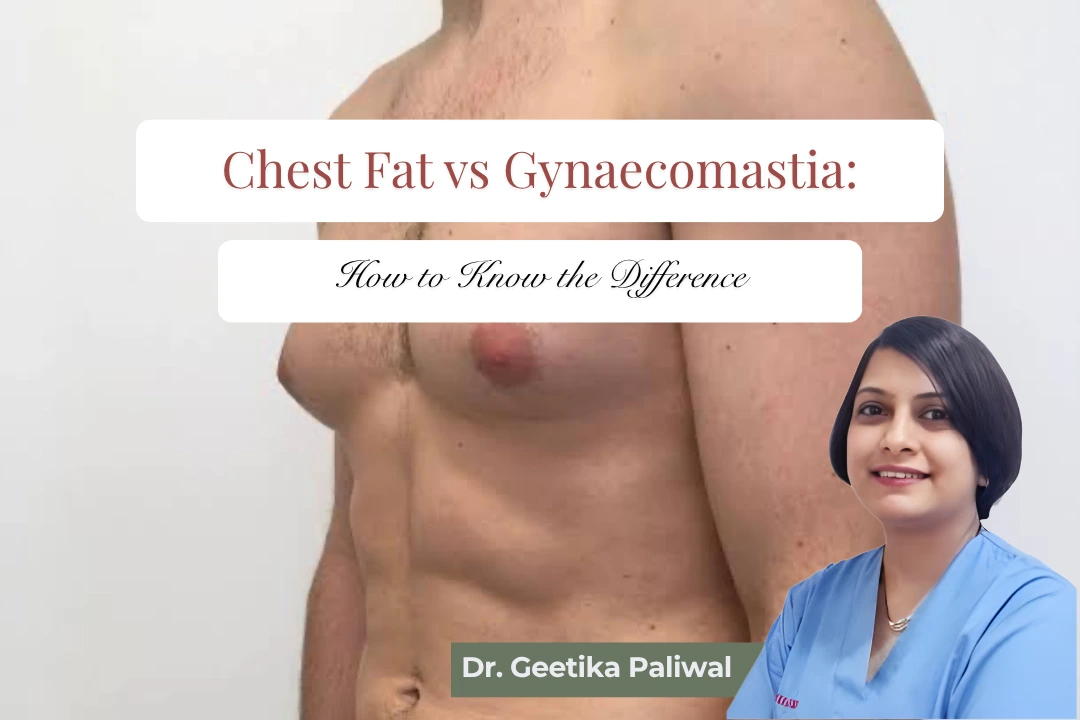
Chest Fat vs Gynaecomastia: How to Know the Difference
An enlarged male chest is a common phenomenon and can occur due to excess fat, glandular tissue or a combination of the two types of tissue. Though chest fat and gynaecomastia appear similar, they are different conditions that can have different treatments.
Chest fat develops due to excess fatty tissues in the chest, and is usually related to an overall weight gain whereas gynaecomastia refers to the enlargement of the glandular breast tissue in males and can be due to hormonal changes, certain medications or other factors.
It is crucial to identify the difference between chest fat and gynaecomastia before considering the possible treatment options for the enlarged male chest. If you are concerned about a persistent enlargement of the male chest, consulting Dr. Geetika Paliwal, Best Cosmetic Surgeon in Indore can guide you to the cause and treatment options.
What Is Chest Fat?
Chest fat, also known as pseudogynaecomastia develops due to the accumulation of excess fatty tissues around the area of the chest.
In most cases, the chest fat is associated with an overall increase in the body weight. The chest will feel soft and the fullness can be distributed across a wider area as compared to gynaecomastia focussed directly beneath the nipple area.
However, some people may find that they lose some chest fat as they reduce their overall body weight by exercising, gaining muscle and eating a balanced diet.
Some people may notice that they have certain areas with stubborn fat that remains despite losing weight and gaining muscle since the body distribution of fat is unique for everyone.
What Is Gynaecomastia?
Gynaecomastia refers to the enlargement of the glandular breast tissue in males. It is primarily due to the imbalance in the action of oestrogen and testosterone on the breast tissue.
Gynaecomastia can develop at any age during puberty, adulthood or later years of life. In some cases, such as during adolescence, it may reduce on its own due to the temporary nature of the hormonal changes.
It can occur on one or both sides of the chest and can be tender to touch.
Certain medications, hormonal conditions and other medical factors can also contribute to gynaecomastia. In such cases, it is critical to obtain the right medical assistance, particularly if the symptoms develop suddenly or with other symptoms.
Chest Fat Vs Gynaecomastia: What Is the Difference?
The most obvious difference between the two is the type of tissue involved in creating an enlarged male chest.
Chest fat is primarily made of fatty tissue and usually feels soft to the touch. Gynaecomastia consists of firm glandular tissue which is located underneath or around the nipple and areola area.
Chest fat is also likely to be accompanied by an increased amount of fat deposits elsewhere in the body whereas gynaecomastia can occur even in lean individuals.
Another crucial difference is that chest fat might reduce with weight loss whereas the glandular gynaecomastia can persist even after exercising and reducing weight.
In some cases, people can have both fat and glandular tissue deposits in the chest area.
Can Exercise Remove Gynaecomastia?
Exercise can help strengthen the pectoral muscles and reduce the amount of overall body fat but cannot eliminate the presence of glandular breast tissue.
If the enlarged male chest is primarily due to excess body fat, it can be possible to reduce the size by exercising regularly and losing weight.
On the other hand, the excess glandular tissue might require surgery to be removed completely. This is why it is crucial to confirm the diagnosis before assuming the cause of weight gain.
Diagnosis of Gynaecomastia
A detailed medical history and physical examination is critical to determine the presence of gynaecomastia.
The doctor will examine the chest tissue to check the distribution and consistency of the enlargement, and decide if it is primarily made up of fat, glandular tissue or a combination of the two types of tissue.
They may also consider a detailed list of medications, supplements, hormonal changes and medical history. In some circumstances, additional investigations are necessary if there is a suspicion of an underlying medical condition.
Treatment Options for Chest Fat
Treatment for excess chest fat depends on the amount of fatty tissue, overall body composition, and individual health.

- Maintaining a balanced diet can help reduce overall body fat.
- Regular cardiovascular exercise may support fat loss and improve fitness.
- Resistance and strength training can help improve chest definition and overall body composition.
- If localised chest fat remains despite consistent diet and exercise, liposuction may be considered in suitable candidates.
- Liposuction removes excess fatty tissue from the chest area and can help create a more defined chest contour.
- Suitability for liposuction depends on factors such as skin elasticity, body frame, amount of fat present, and overall health.
Treatment Options for Gynaecomastia
Treatment for gynaecomastia depends on its cause, severity, duration, and the type of tissue involved.
- Recent gynaecomastia caused by hormonal changes may improve on its own over time.
- If a medication is contributing to the condition, the doctor may review or adjust it when appropriate.
- When an underlying medical condition is responsible, treating that condition may help improve gynaecomastia.
- Persistent gynaecomastia with excess glandular tissue may require surgical treatment.
- Liposuction may be used when excess fatty tissue is present.
- Surgical excision may be recommended to remove excess glandular tissue.
- In some cases, a combination of liposuction and gland removal may provide better chest contouring.
- The choice of treatment depends on the amount of fat, glandular tissue, excess skin, and the overall shape of the chest.
When Should You Consult a Doctor?
You should consult a doctor if you notice a change in the shape of your chest mass following losing weight or exercising, if there is a hard lump beneath your areola or if you are experiencing pain, tenderness or asymmetry in your chest. Consulting an experienced cosmetologist in Indore like Dr. Geetika Paliwal can help you find the difference between chest fat and gynaecomastia.
Sudden enlargement, discharge from the nipple or the development of a hard lump should be evaluated medically instead of assuming that it is gynaecomastia. Early evaluation helps to understand the cause and if treatment is necessary.
Conclusion
Chest fat and gynaecomastia can appear similar but their underlying tissue and treatment options are different. Chest fat can reduce with a reduction in overall body weight whereas true gynaecomastia in males with increased glandular tissue can persist even after exercising and losing weight.
If you are unsure whether you have excess chest fat or gynaecomastia, you can consult Dr. Geetika Paliwal, Plastic Surgeon in Indore for a detailed examination.
After examining the chest area and reviewing the medical history, you can be guided about the most appropriate treatment option based on the causes of the enlargement such as fat tissue, glandular tissue or a combination of the two.
FAQs
Chest fat usually feels soft and is spread across the chest, while gynaecomastia often involves firmer glandular tissue beneath or around the nipple. A physical examination by a doctor can provide a more accurate diagnosis.
Weight loss can reduce excess chest fat, but it may not remove true glandular gynaecomastia. If glandular tissue remains after weight reduction, additional treatment may be considered.
Exercise can strengthen the chest muscles and reduce overall body fat but cannot directly remove glandular breast tissue.
Yes. Hormonal changes during puberty can cause temporary enlargement of breast tissue in boys. In many cases, it improves naturally over time.
Yes. Gynaecomastia can affect one or both sides of the chest and may sometimes appear asymmetrical.
Glandular tissue removed during surgery generally does not grow back under ordinary circumstances. However, significant weight changes, hormonal changes or certain medications may alter the appearance of the chest in the future.
Incisions are usually planned in less noticeable areas, often around the edge of the areola. The extent of scarring depends on the surgical technique and amount of tissue or skin requiring removal.
Liposuction can remove excess fatty tissue, but firm glandular tissue may need surgical excision. Some patients require a combination of both techniques.
Surgery is generally considered after the chest development and hormonal changes of puberty have stabilised, although individual circumstances vary and require medical assessment.
A qualified plastic and cosmetic surgeon like Dr. Geetika Paliwal can assess whether the enlargement is caused by fat, glandular tissue or both and recommend the appropriate treatment option.

Post a comment
You must be logged in to post a comment.