Impact of Rapid Weight Loss on Your Skin
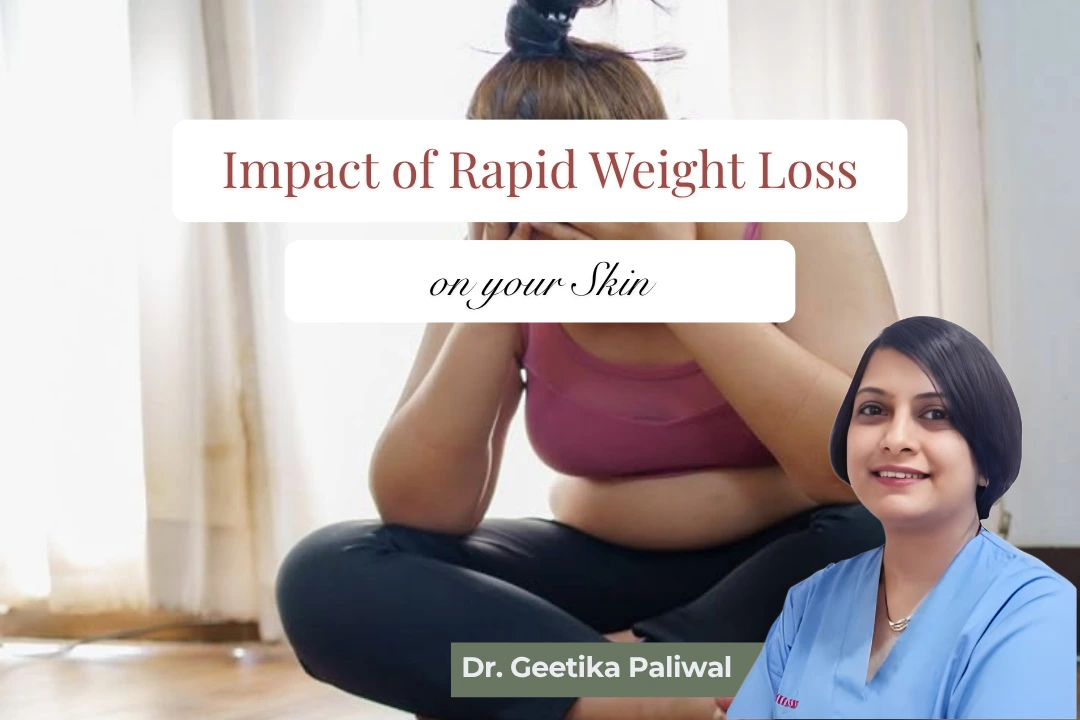
Losing excess weight can have a remarkable effect on your appearance. But if you lose weight too quickly, your skin may not contract as it should. This can lead to sagging skin or loose skin folds on your face, abdomen, arms, thighs, breasts, and neck. Each person’s experience with loose skin after weight loss is unique and depends on their age, genetics, skin condition, the amount of weight lost, and the speed of the process. Dr. Geetika Paliwal, plastic surgeon in Indore, explains how rapid weight loss affects the skin and which cosmetic procedures can help get rid of loose skin after weight loss.
How Does Rapid Weight Loss Affect Your Skin?
Your skin stretches as you gain weight, and it can take time to shrink back to its original size when you lose weight. As a result, your skin may appear loose and wrinkled.
Some of the most common effects of rapid weight loss on the skin include:
1. Loose Skin on the Abdomen
Your abdomen is the most common site of loose skin after substantial weight loss.The skin may appear loose, wrinkled, or folded, especially around the lower abdomen. Your lower abdominal skin may also hang over your pubic area in the form of an apron.
2. Sagging Skin on the Arms
The arms are also commonly affected by loose skin after weight loss. Your upper arms may have loose hanging skin that can prevent you from wearing certain types of clothing. This condition is also known as bat wing and can be corrected with an arm lift.
3. Changes to the Face and Neck
As you lose weight, your face and neck may also change. Your face can appear hollow, especially around the temples, and your neck skin may sag. Other effects may include wrinkles, loss of definition around the jawline, and a tired or aged appearance. These changes can often be corrected with facial fillers, fat grafting, skin tightening treatments, or facial rejuvenation surgery.
4. Changes to the Breasts
Your breasts may also be affected by rapid weight loss. They may appear smaller, droopier, or more sagging than before. In addition, your breasts may have loose skin around the areola and a lower hanging position of the nipples. A breast lift or augmentation may be recommended, depending on your condition.
5. Loose Skin on the Thighs
Your thighs can also be affected by loose skin after rapid weight loss. The inner and outer thigh skin may sag and look wrinkled. In addition, the skin on your thighs may rub against each other when walking, causing irritation. This condition can be corrected with thigh lift surgery.
6. Stretch Marks
Stretch marks can also develop or become more noticeable after rapid weight loss. This is because loose skin after weight loss can stretch the skin further, making stretch marks appear. However, stretch marks are not permanent, and they will fade away over time.
7. Dry and Dull Skin
Loose skin after weight loss can also cause dry and dull skin. This is because a rapid or extreme low-calorie diet can leave you deficient in essential nutrients that nourish the skin and promote its health. As a result, you may experience dry, dull, and less elastic skin, thinning hair, and brittle nails. It is important to eat a healthy and balanced diet to ensure that your skin is well-nourished throughout your weight loss journey.
Why Does Some Skin Tighten After Weight Loss While Other Skin Does Not?
There are several reasons why some skin tightens after weight loss while others do not. The following factors can affect the ability of your skin to contract:
Your Age
As you age, your skin becomes thinner and less elastic. This means that older people are more likely to develop loose skin after weight loss.
The Amount of Weight Lost
The greater the amount of weight lost, the more likely it is for the skin to be affected. In addition, if you have lost a significant amount of weight, the skin may be unable to return to its original shape.
How Long You Were Overweight
If you were overweight for a long time, your skin may have been stretched for an extended period, making it difficult to contract back to its original size.
Your Genes
Some people are genetically predisposed to develop loose skin after weight loss, while others are not.
Sun Exposure
Exposure to ultraviolet (UV) rays can damage the skin and make it less elastic. This can contribute to the development of loose skin after weight loss.
Smoking
Smoking can also damage the skin and make it less elastic. In addition, it can impair the production of collagen, a protein that helps give the skin its structure and elasticity.
The Speed of Weight Loss
If you lost weight too quickly, your skin may not have had enough time to adjust to the new size.
Can You Prevent Loose Skin During Weight Loss?
It can be hard to prevent loose skin from developing after substantial weight loss. However, there are several things you can do to reduce the risk of developing loose skin after weight loss. These include:
- Losing weight at a steady pace
- Eating a healthy and balanced diet
- Getting enough protein
- Drinking plenty of water
- Exercising regularly
- Not smoking
- Protecting your skin from the sun
- Maintaining a healthy weight

- Skin rejuvenation treatments
- Non-surgical skin tightening treatments
- Dermal fillers
- Fat grafting
- Tummy tuck
- Arm lift
- Thigh lift
- Breast lift
- Body lift
- Facelift and neck lift
Non-surgical treatments can be effective for mild cases of loose skin after weight loss. However, if you have a significant amount of excess hanging skin, you may need to consider body contouring surgery to remove the excess skin.
When Should You Consider Plastic Surgery After Weight Loss?
You should consider plastic surgery after weight loss if:
- Your weight loss has stabilized
- You have maintained your target weight for a while
- Your excess skin is affecting your comfort or ability to engage in everyday activities
- Your loose skin is causing you to feel self-conscious about your appearance
- You have realistic expectations about plastic surgery and understand the risks and possible complications
- You are in good health and able to undergo surgery
While working out can help you build muscle and tone your body, it cannot eliminate loose skin after weight loss.
Can Creams Tighten Loose Skin After Weight Loss?
Moisturizers and creams can help improve the health and appearance of your skin, but they are unlikely to help tighten loose skin after weight loss. In addition, creams and moisturizers cannot eliminate excess hanging skin.
Topical treatments can improve the appearance of your skin, making it look healthier and younger. However, they are unlikely to help reduce the appearance of loose skin folds and hanging skin. If you are looking for a more effective way to tighten loose skin after weight loss, you may want to consider non-surgical skin tightening treatments.
What Treatments Can Help Loose Skin After Weight Loss?
There are several treatments available to reduce the appearance of loose skin after weight loss. The most appropriate treatment for you will depend on the severity of your condition and the areas of your body that are affected.
Some of the treatments for loose skin after weight loss include:
A plastic surgeon can help you decide which procedures can help you achieve your desired results. They will examine your skin and assess the areas of your body that need to be contoured.
Conclusion
Losing weight rapidly or substantially can have numerous beneficial effects on your health and appearance. However, it can also lead to a number of undesirable side effects, including loose skin, volume loss, and changes to your body contour. If you are experiencing these changes and would like to restore your appearance after weight loss, you can consult Dr. Geetika Paliwal, plastic surgeon in Indore. The most appropriate treatment for loose skin after weight loss will depend on the amount of weight lost, your skin condition, the areas that are affected, and your cosmetic goals. The goal of body contouring after weight loss is to restore a natural and desirable appearance.
FAQs
Skin becomes loose when the underlying fat reduces faster than the stretched skin can contract. This is especially common after significant or rapid weight loss.
Mild loose skin may improve gradually, particularly in younger people with good skin elasticity. Significant excess skin may not tighten completely on its own.
Gradual weight loss, adequate protein intake, hydration, strength training, sun protection, and avoiding smoking may help maintain skin health, although loose skin cannot always be prevented.
Treatment depends on the severity and location of excess skin. Dr. Geetika Paliwal in Indore can assess whether non-surgical treatment or body contouring surgery may be suitable.
Exercise can build muscle and improve body contour, but it cannot remove significant excess or hanging skin.
It can. Rapid facial fat loss may cause hollow cheeks, sunken temples, wrinkles, and loose skin around the jawline and neck.
Procedures may include tummy tuck, arm lift, thigh lift, breast lift, lower body lift, facelift, or neck lift depending on the areas affected.
It is generally advisable to consider body contouring once your weight has stabilised and you have maintained your target weight for some time. A plastic surgeon can assess your overall health, skin condition, and treatment goals before recommending surgery.
A tummy tuck can remove excess abdominal skin and may tighten the abdominal wall when required. Suitability depends on individual anatomy and health.
You can consult Dr. Geetika Paliwal in Indore for evaluation of loose skin and to discuss suitable surgical or non-surgical body contouring options.
